
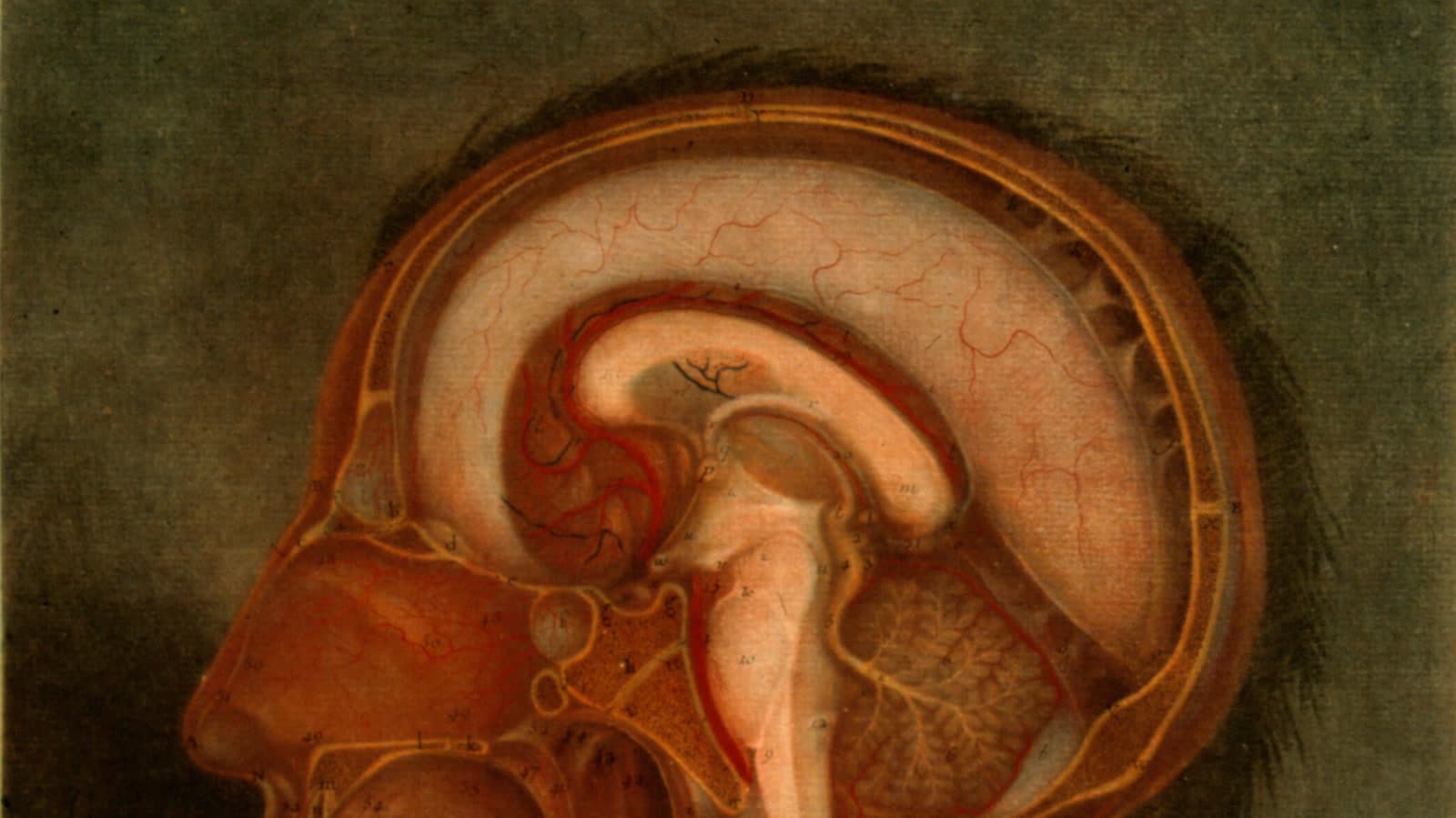
Attention is one of those human faculties whose importance we only understand when it starts to fail. It seems simple: direct the mind toward an object and keep it there long enough. And yet a large part of our existence depends on that apparently trivial mechanism. Studying, listening, remembering an instruction, finishing a conversation, organizing a project, or simply remaining seated when no immediate reward is waiting for us demands a sophisticated coordination among motivation, working memory, inhibitory control, and the perception of time. Medicine grouped certain persistent alterations of these processes under a name we know fairly well today: attention-deficit/hyperactivity disorder. The problem is that the name, although clinically useful, explains very little about what it feels like to live inside it.
For a long time I found it hard to understand a fairly particular contradiction in my own behavior. I can spend hours obsessed with an idea, study a complex subject until I understand it in depth, build projects from scratch, or find energy to solve problems that, objectively, require considerable intellectual effort. And yet that same mind can find it disproportionately hard to answer a message, start a simple task, listen to an audio a few minutes long, or get up to do something it knows perfectly well it needs to do. It is almost offensive to observe such incoherence from the inside. Not because one does not know what must be done, but because there is a strange distance between knowing it and managing to begin.
To say that someone with ADHD has an “attention deficit” may be correct in certain contexts, but it is conceptually incomplete. Attention does not disappear; its regulation becomes inconsistent. A person may be unable to stay twenty minutes in front of a monotonous obligation and, hours later, concentrate extraordinarily on something that awakens enough interest. From the outside it looks like a moral contradiction: if you can do it here, why can’t you do it there? From neuropsychiatry, however, the question changes. The frontostriatal networks, executive functions, and catecholaminergic systems related to dopamine and noradrenaline take part in our capacity to inhibit impulses, sustain goals, and organize behavior toward rewards that do not yet exist. The problem then stops looking like a simple absence of will and begins to be understood as a difficulty in turning intention into conduct in a stable way.
That explanation is especially uncomfortable for me because I have always valued discipline highly. Studying medicine demands continuity, memory, schedules, and a fairly unromantic relationship with effort. Entrepreneurship, on the other hand, demands the exact opposite at certain moments: tolerate uncertainty, chase new ideas, improvise, and obsess over problems that nobody has asked us to solve yet. It is curious to discover that the same mind can feel extraordinarily comfortable in the chaos of building something new and desperately clumsy in front of a ten-minute administrative task. There are days when I can imagine an entire company before breakfast and others when starting an academic reading seems to require a diplomatic negotiation with myself.
Here medicine inevitably brushes against philosophy, because few things are as philosophical as asking how much control we really have over what we do. We like to imagine the will as a kind of inner sovereign: first we decide and then the body obeys. It is a comfortable idea because it organizes the world morally. The disciplined person succeeds because they wanted to; the distracted one fails because they did not want it enough. I myself have thought that way about myself many times. If I know I can perform much more, then any lesser performance immediately looks like a failure of character. But it is enough to study the brain a little for that border to start becoming uncomfortable. A decision needs memory to keep its purpose, inhibition to resist alternatives, motivation to sustain the effort, and an adequate valuation of future rewards. The will exists, of course, but it does not operate in a vacuum. It has anatomy, chemistry, history, and limits.
That does not mean the diagnosis should become a universal absolution. It would be as wrong to use neurobiology to deny all responsibility as to use responsibility to deny neurobiology. Understanding why I procrastinate does not finish a piece of work for me. Understanding why my attention fluctuates does not study a class or build a project. Perhaps the most sensible position is precisely in that intermediate discomfort: understand the limitations without building an identity around them. The explanation should serve to intervene, not to surrender.
There is also a peculiar relationship between ADHD and time. The future is an abstraction that demands mental representation. We know intellectually that an exam will arrive, that a deadline will fall due, or that a task will need several hours, but knowing it does not guarantee feeling its proximity. I have experienced too many times that strange transformation in which something can remain for days in the territory of “I should do it” and, when only a few hours are left, suddenly become the most important matter in the universe. Then a surprisingly efficient version of me appears: I read fast, connect concepts, discard what is irrelevant, and produce in a few hours an amount of work that would have seemed improbable the day before.
The danger is falling in love with that version. Urgency can make me feel extraordinarily competent, but it is still a costly way of functioning. Living in the hope that pressure will activate what planning failed to activate ends up turning every obligation into a small emergency. And when one discovers that one can survive those emergencies repeatedly, one runs the risk of confusing survival with method.
Perhaps that is why one of the strangest experiences is knowing one’s own potential and not always being able to access it. I do not need anyone to tell me I can do certain things; I have already done them. Precisely for that reason it is more frustrating not to manage to repeat them when I want to. There is an enormous difference between doubting one’s own capacity and doubting the availability of that capacity. The first question is “Can I do it?” The second is considerably more uncomfortable: “I know I can do it, but why can’t I start now?”
This difference also changes the way one judges oneself. An ambitious person tends to measure their present against everything they imagine they could become. That comparison can be productive up to a point; then it starts to become a permanent debt to a hypothetical version of oneself. If, on top of that, execution is irregular, every unproductive day looks like evidence of wasting capacities. The result can be a cruel paradox: the greater the awareness of one’s own potential, the more intolerable any distance from it becomes.
Philosophy has spent centuries asking what it means to know oneself. In this context, perhaps knowing oneself has a less solemn and much more practical interpretation: stop organizing life for the person we imagine we ought to be and start organizing it for the mind we actually have. If I know that a date too far away loses psychological reality, I need to build intermediate deadlines. If working memory is vulnerable, I must externalize it. If the phone turns five minutes of distraction into forty, it does not make much sense to keep it beside me and turn every study session into a moral test of self-control. Designing the environment is not cheating. It is recognizing that human conduct has always depended on the environment, even when we prefer to attribute it exclusively to character.
I have also ended up understanding something about my relationship with ideas. Novelty has an almost physical capacity to capture my attention. A new project can occupy my mind for hours; names, structures, business models, technologies, future problems, and solutions to problems that do not even exist yet appear immediately. That mental speed can be genuinely useful. The mistake would be to turn it into an absolute virtue. Creating ideas is not the same as sustaining them. Starting produces dopamine; maintaining demands architecture. Perhaps a large part of growing up consists precisely in learning to transform enthusiasm into systems before the next interesting idea arrives.
Even pharmacological treatment raises an interesting philosophical question. Some people fear that modifying attention neurochemically will alter what they consider their “true self.” But that intuition presupposes that there is a chemically neutral version of ourselves, when every human experience already depends on neurotransmitters, sleep, food, stress, hormones, and an innumerable number of biological variables. A correctly indicated medication does not introduce chemistry into a mind that was previously free of it; it modifies a system that was always chemical. The reasonable question is not whether an intervention is artificial, but whether it improves functioning, reduces suffering, preserves autonomy, and offers more benefits than risks.
Perhaps that is one of the most interesting ideas ADHD can teach us about the human condition. Being free does not necessarily mean lacking constraints. None of us meets that requirement. We are organisms limited by a biology we did not choose, educated in circumstances we did not choose either, and obliged to decide with a brain whose architecture we are only beginning to understand. A more realistic freedom consists in getting to know those constraints progressively and, within them, increasing our margin of action.
That idea is considerably more useful to me than any narrative about being broken or possessing some kind of superpower. I do not need either of the two. I prefer to know that I have a mind with certain advantages, certain costs, and a particular way of negotiating with interest, effort, and time. Sometimes that mind can take me fairly far; other times it needs almost ridiculously simple structures to do something ordinary. Both things can be true at the same time.
Perhaps growing up with ADHD consists precisely in stopping asking why one does not function as one thinks one should and starting to study, with a certain curiosity, how one actually functions. Not to accept every defect as inevitable, but to intervene with greater intelligence. There is something deeply medical in that attitude: observe before judging, identify mechanisms before treating, and accept that understanding a cause does not mean resigning oneself to its effects.
In the end, perhaps that is also a reasonable definition of knowing oneself. Not finding an elegant explanation for everything we are, but learning which conditions allow our best version to appear more often.
Because understanding the brain does not diminish the importance of the will; it simply keeps us from spending a lifetime blaming the will for problems that first needed to be understood.