There is something strange about discovering how much of what we consider deeply our own depends on conditions we never chose. Intelligence is a good example. We can study, develop certain capacities, and learn to use better the ones we have, but we do not all start from the same place. Part of those differences has genetic and biological components, so even before asking what we do with our intelligence we have to accept a less comfortable fact: its distribution is, to a certain extent, arbitrary.
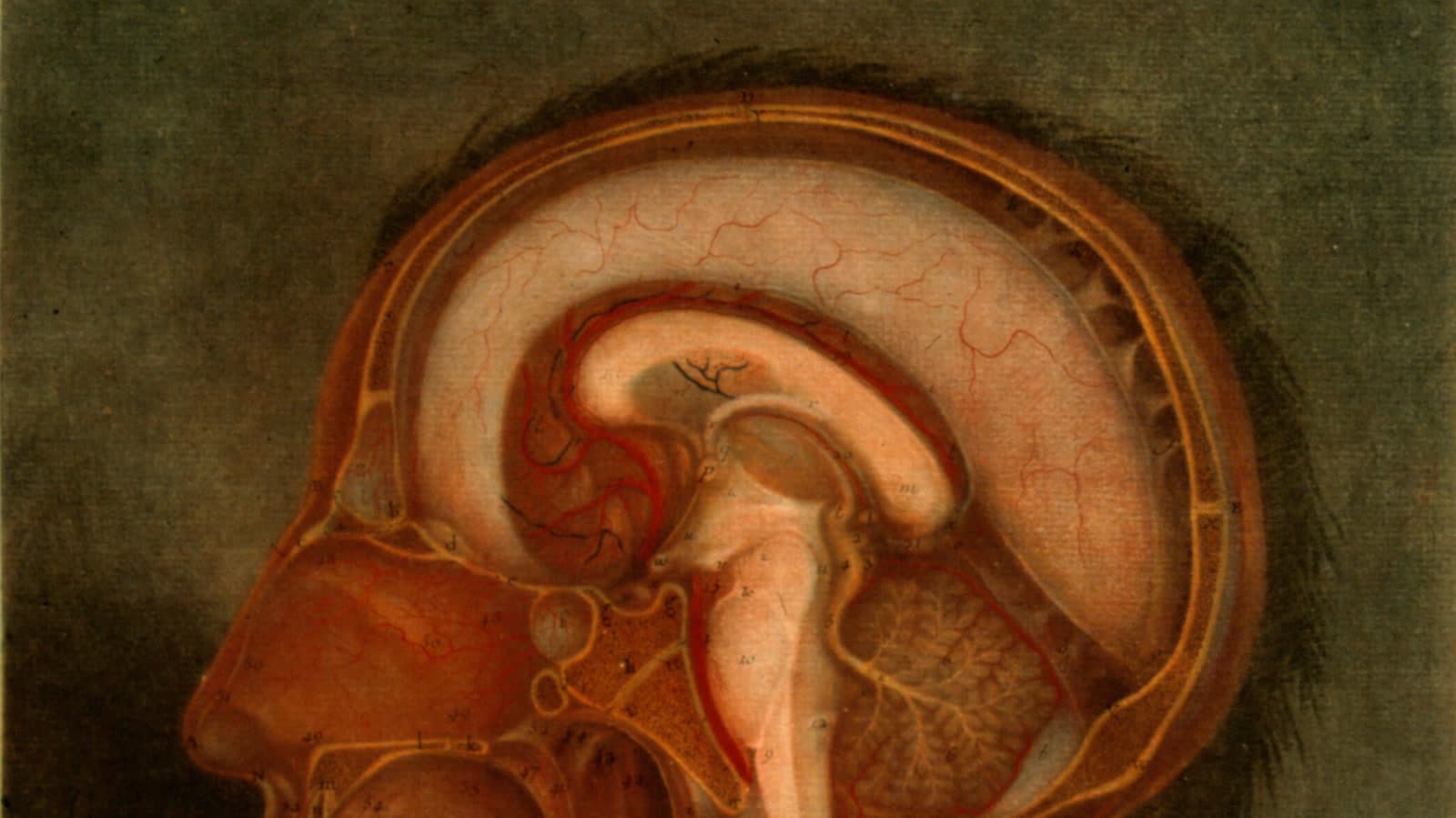
IQ tries to measure some of those differences through standardized tests of certain cognitive capacities. It is an imperfect measure and does not represent the totality of human intelligence, much less the value of a person, but it also does not measure something irrelevant. Cognitive capacities have considerable heritability and depend on the development and functioning of the brain. A brain injury, a neurodegenerative disease, or certain developmental alterations can profoundly change memory, reasoning, behavior, and even aspects of personality. The brain, apparently, is not only the instrument through which we express our mind. It is intimately related to what the mind can become.
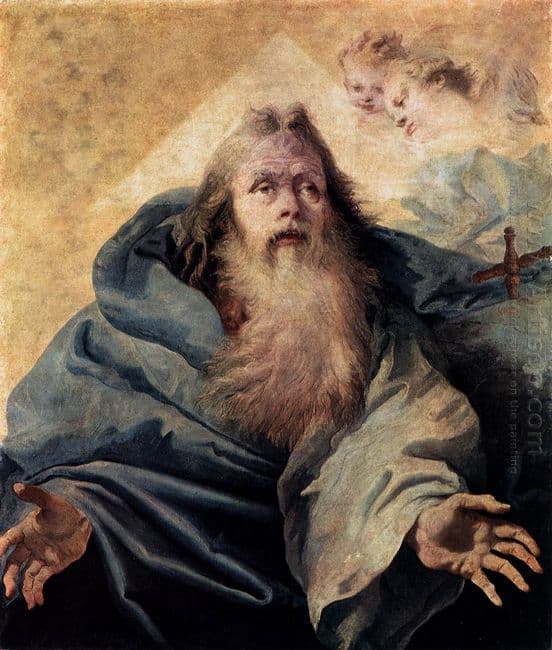
This is where the question about God starts to interest me, although the title of this article is probably too ambitious. IQ does not prove that God does not exist. Intellectual inequality also does not, by itself, constitute a refutation of theism. A believer could answer that divine justice does not imply distributing identical capacities, that our earthly existence does not exhaust human identity, or simply that God's purpose cannot be inferred from our cognitive differences. Those are possible answers, although I am not completely sure they resolve the problem that actually interests me.
My doubt is not so much why God would allow one person to have a higher IQ than another, but what it means that our mental experience depends so deeply on a brain that can change, deteriorate, and finally stop working. If by modifying brain matter we can modify memory, reasoning, temperament, or perception, it is reasonable to ask what exactly remains of us when that matter disappears. The traditional idea of a soul separate from the body seems to need to explain not only how consciousness survives, but also how it keeps an identity that throughout our life was tied to cerebral functioning.
This also does not prove that the soul does not exist. One could conceive of a soul whose nature is distinct from memory, intelligence, or personality, although then another conceptual problem appears: the more characteristics of a person we attribute to the brain, the harder it becomes to explain what it means to say that the same person continues existing after death. A consciousness without my memories, without my way of reasoning, without a good part of my personality, and without the continuity of my experience could still be "something," but it is not obvious why it should still be "me."
Perhaps that is why neuroscience does not necessarily eliminate the possibility of God, but it does make a certain intuitive conception of the soul more difficult. We can still believe that there is some dimension of consciousness that transcends the brain, although that claim requires more than pointing out that matter seems insufficient to explain our subjective experience. It also has to explain why altering the brain so consistently alters what we identify as mind.
I do not know whether from this it follows that after death there is nothing. It would be contradictory to criticize a religious certainty by immediately replacing it with a materialist certainty that I also cannot prove. What does change for me is the proportion of doubt. The more I understand the extent to which memory, intelligence, personality, and perception depend on a physical organism, the less intuitive I find the idea that there exists inside us a complete and independent version of who we are, waiting to continue when that organism disappears.
And if that continuity finally does not exist, the consequence does not have to be nihilistic either. That an experience ends does not mean that while it exists it lacks value. Perhaps for too long we have confused permanence with importance, as if something needed to last forever in order to have mattered. I do not know whether we have another life after this one. Precisely for that reason it seems reasonable to me to grant this one an importance that does not depend on the promise of another.